Amulet creations: unceasing prayers for well-being

Discover Yorei's unique, handcrafted paper amulets, designed as unceasing prayers to Hashem for your health and well-being. Each amulet is a testament to intention and devotion, crafted to bring comfort and positive energy into your life.

The Written Jewish Amulet

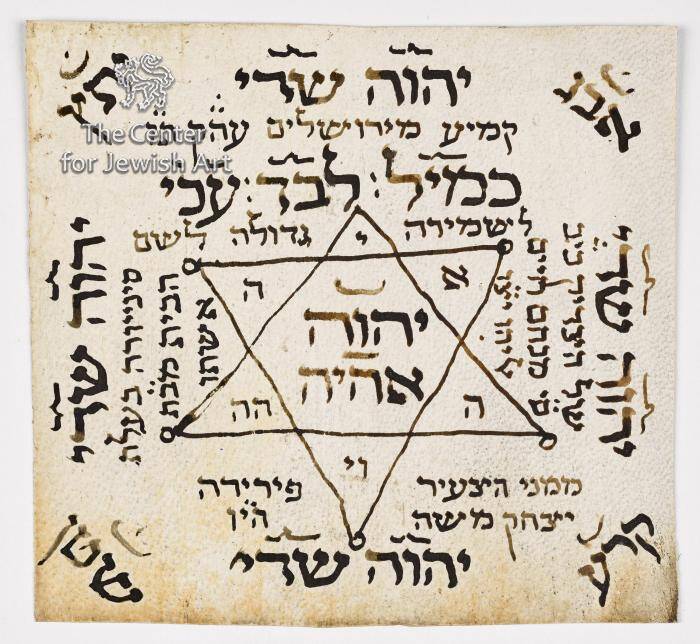
 Amulets are employed to heal or to protect human beings, animals, and even inanimate objects. Written amulets remain significant in Jewish culture because they contain the names of God and of angels. 

Jeremy Smoak (2016) writes of qame’a, the hebrew word for amulets, that they produce a feeling [on the wearer] that they are part of the body and that the writing on a qame’a interacts with the body on a physical level and Danya Ruttenberg (2024) writes as [qame’a] dangles from, bounces off, and returns to the body, the words inscribed on their surfaces are replayed in the mind.  Dori Midnight (2022), a Jewish ritualist, writes that the power of the amulet is that it holds a connection to ourselves, each other, the maker, the elements, and divinity and that the making and gifting of amulets can be a way of generating and feeling community resilience.

Every inscription on an amulet has a purpose and is meaningful and it is never justifiable to postulate that a group of letters has been inserted merely to fill up a line or for any other trivial motive. Amulets are tailor-made for specific events. 

Writing the sacred names of God on your amulet

The written amulet is still among people because it contains the names of God. Vocalizing names of God is what makes an amulet a performative act. The efficacy of magical speech derives not from the personal charisma of the practitioner but from delegated divine authority, activated through formulae that invoke God, angels, or sacred names. Writing itself becomes a stabilized performative act, as amulets function as enduring embodiments of speech intended to continue acting in the world.

Depending on the care situation, an amulet could include the eight letter name of God, which is the tetragrammaton and Adonai; the amulet could include the twenty-two letter name of God, which is the Priestly Blessing, Numbers 6:24-26; the amulet could include the forty-two letter name of God which is the Ana Beko’ach prayer, either in it’s entirely or even one of the seven lines; or the amulet could include the whole or parts of the seventy-two name of God found in Exodus 14:19-21. 

Writing biblical and literary passages on your amulet

Writing the names of angels on your amulet

I will write the names of certain angels. The five most often invoked angels on amulets are Uriel, Rapheal, Gabriel, Michael, and Nuriel. Together, these names from the mnemonic ‘Argamam.’

Uriel is known to have acted as the heavenly interpreter of Ezra’s visions, and he is also cited as the messenger to visit Noah and warn him of the flood as well as the angel who led Abraham out of Ur.

Rapheal, according to Rabbi Abba in The Zohar, is charged to heal the Earth, and through him…the Earth furnishes an abode for man, whom also he heals of his maladies. Rapheal was sent to heal Jacob’s thigh after the patriarch wrestled at Peniel.

Gabriel is mentioned in Sanhedrin 95b as one who smote Sennacherib’s hosts with a sharpened scythe that had been ready since creation. In Moses Cordovero’s Palm Tree of Deborah, Gabriel is the prince of justice.

Michael, it is said, stayed the hand of Abraham as he was about to sacrifice Isaac on the Akedah. He is also the forerunner to Shekinah and as the one who saved Daniel’s companions from the fire.

Nuriel issues from Chesed and takes the form of an Eagle. Nuriel is also known for his height, reaching three hundred parasangs tall and has a retinue of fifty myriads of angels all fashioned out of water and fire.

Drawing symbols on your amulet

Symbols on an amulet might include:

  • angels to represent divine judgement and divine power or atonement or repentance
  • arks to connote fertility or survival
  • the moon to connote feminism
  • the menorah to invokes protection from the evil eye, invoke divine light, and expel dark forces
  • the Hamsa, or hand or Miriam, to ward off the evil eye and protect children and mothers
  • protective eyes, which are typically drawn as single eyes, to deflect harm
  • human figures, though rare, to represent binding or banishing harmful beings and also represent guardian presence

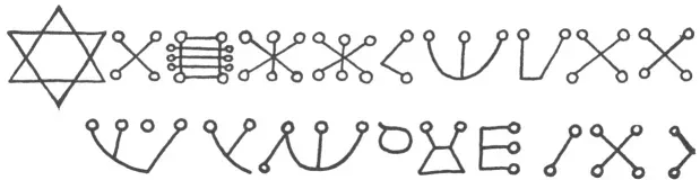
There are also magical alphabets on written amulets. These alphabets were individual creations and the shapes and ornaments atop the letters were up to the ingenuity of the writer. 

Menu of situations for which one might carry an amulet

Life Transitions & Threshold Moments

Moments when identity, role, or direction is shifting.

  • Beginning a new job, school, or vocational path
  • Entering adulthood, parenthood, or elderhood
  • Moving to a new home, city, or country
  • Returning to life after a major disruption or pause
  • Marking a rite of passage, initiation, or ordination

An amulet here serves as a portable witness to who you were, who you are becoming, and what you refuse to forget.

Times of Uncertainty or Decision

When clarity is incomplete and waiting is unavoidable.

  • Living with an unresolved question
  • Standing between multiple possible futures
  • Waiting for news, outcomes, or permission
  • Navigating moral or ethical complexity
  • Holding tension between responsibility and desire

The amulet holds intention steady while the situation unfolds.

Health, Healing & Well‑Being (Non‑Medical, Symbolic)

Moments when the body or spirit needs care, reassurance, and dignity.

  • During illness, recovery, or long-term treatment
  • While accompanying a loved one through health challenges
  • In periods of exhaustion, burnout, or grief
  • As a reminder of worth beyond productivity
  • To anchor hope without denying difficulty

Here, the amulet functions as an unceasing prayer—not to control outcomes, but to affirm care and presence.

Protection of Inner Life

When external conditions threaten one’s sense of self or integrity.

  • Exposure to hostility, erasure, or misunderstanding
  • Working in emotionally demanding environments
  • Living with chronic stress or overstimulation
  • Setting boundaries that are hard to maintain
  • Choosing gentleness in hard circumstances

The amulet becomes a quiet boundary, reminding the bearer of their center.

Sacred Work & Service

When one carries responsibility for others.

  • Teaching, caregiving, counseling, or chaplaincy
  • Activism rooted in compassion rather than rage
  • Leadership roles with moral weight
  • Holding space for conflict, grief, or transformation
  • Serving in contexts that demand emotional labor

An amulet here bears the prayer: May I act with wisdom, humility, and care.

Memory, Grief & Continuity

When absence must be carried without closure.

  • Mourning a loved one or community
  • Commemorating anniversaries of loss or trauma
  • Carrying ancestral memory or inherited stories
  • Navigating life shaped by what can’t be fixed
  • Honoring what remains unfinished

The amulet keeps memory alive without pain being the only language.

Daily Grounding & Practice

Not only for moments of crisis, but for ordinary faithfulness.

  • Establishing or sustaining a spiritual practice
  • Beginning or ending the day intentionally
  • Carrying a verse, name, or value through daily life
  • Reorienting attention amid distraction
  • Living out a chosen commitment

Here, the amulet is less emergency tool and more companion.

Travel & Liminal Spaces

When one is neither here nor there.

  • Long journeys or pilgrimages
  • Temporary dislocation (hospitals, shelters, retreat centers)
  • Crossing borders—geographical or emotional
  • Being far from familiar supports
  • Pauses between chapters of life

The amulet says: You are not unmoored.

When Words Are Hard to Speak

When prayer cannot be formulated aloud.

  • Times of speechlessness or overwhelm
  • When faith feels fragile or quiet
  • When prayer would feel dishonest or forced
  • When silence is the most truthful response

The amulet prays without demanding articulation.