Unlock ancient wisdom, find your path
Welcome to Sorteslibri, where the ancient art of bibliomancy meets personalized spiritual guidance. Discover answers to your deepest questions and find well-being through custom-created amulets.
Offerings

Bibliomancy readings
Receive profound insights and guidance from ancient texts to navigate your current challenges.

Amulet creations
Commission personalized paper amulets as unceasing prayers for your health and well-being.
When I practice bibliomancy or design amulets for someone, I am working with the belief that exile is not only a place but a condition of the soul, a narrowing of breath, language, and possibility. Opening a text at random or shaping an object by hand creates a moment of interruption, a crack where something other can speak. The words that surface, or the symbols carried close to the body, do not dictate a future; they remind a person of their belonging to a larger story. In this way, divination becomes pastoral work. It helps people remember what has been hidden by fear or displacement, and offers a tangible companion as they cross back toward freedom, dignity, and self-trust.
Moving from exile to liberation
Central to my spiritual care-as-mystical practice is the notion that we are all living in some form of exile
and we must move towards liberation.
Many exiles
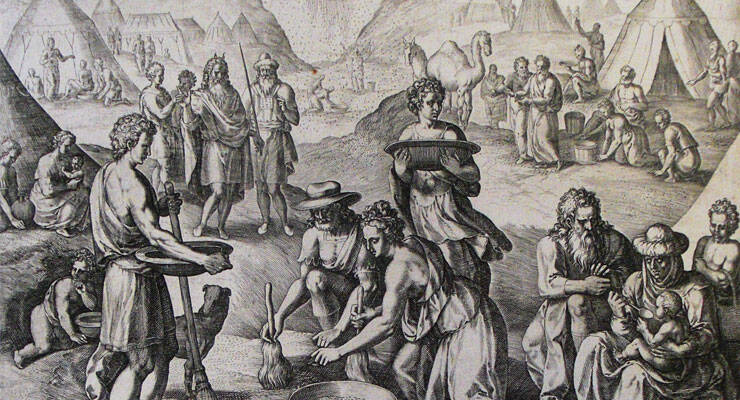
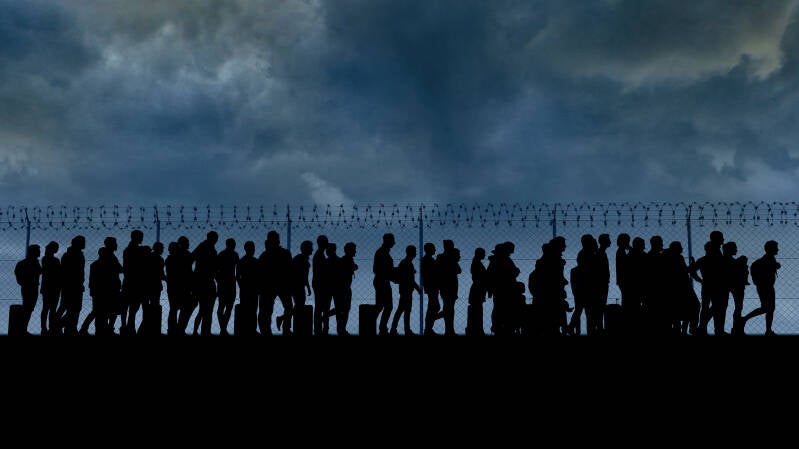
Exile can take the most visible form as physical displacement: being forced or compelled to leave one’s homeland through war, persecution, economic necessity, or environmental collapse. This kind of exile is marked by borders crossed and languages learned under pressure, by the ache of familiarity replaced with strangeness. Yet even voluntary migration can carry the weight of exile when departure is shaped by constraint rather than desire. In physical exile, the body relocates, but memory does not; home persists as a mental geography, sometimes idealized, sometimes frozen in loss. Closely related is social exile, which can occur without crossing a single border—through ostracism, discrimination, or the quiet unravelling of belonging within one’s own community.
Other forms of exile are less visible but often more disorienting. Spiritual exile arises when a person feels cut off from God, meaning, or the sacred frameworks that once oriented their life; the rituals remain, perhaps, but the sense of presence does not. Moral exile occurs when one’s conscience is fractured—after participation in harm, complicity, or systemic injustice—leaving a person estranged from their own ethical self. Digital exile, increasingly common, emerges in a world mediated by screens: being silenced, surveilled, algorithmically erased, or paradoxically overwhelmed by constant connectivity that replaces depth with noise. Alongside interior exile caused by trauma or shame, and temporal exile produced by rapid cultural change or aging, these forms remind us that exile is not only about where one is forced to live, but about the painful distance between who one is, what one values, and where one feels they are truly allowed to exist.
Liberations
Liberation often begins at the personal level, where individuals work to recognize and undo forms of internalized oppression such as shame, fear, or self-doubt. This type of liberation involves learning to trust one’s own experiences and to see oneself as deserving of dignity and agency. Rather than being just about self-help, personal liberation is about understanding how larger systems of power shape the way people think about themselves. However, personal change alone is limited; without support from others and from social structures, individual freedom is difficult to sustain.
Spiritual liberation addresses questions of meaning, worth, and belonging, especially for those whose spiritual or religious experiences have been shaped by control, exclusion, or harm. Spiritual liberation involves reclaiming beliefs and practices that affirm human dignity rather than enforcing obedience or fear. It allows individuals and communities to reimagine their relationship to the sacred in ways that support healing, justice, and hope. Rather than retreating from the world, spiritually liberatory practices often sustain people in long struggles for change, providing ethical grounding and resilience when personal or social liberation feels incomplete.